Correctly referring to standards

Last updated:
3/10/2025

man writing and typing

Correctly referencing standards: a small effort, a big difference

Standards are the building blocks for quality, safety and clarity in countless sectors. But they only provide real value when they are also referred to correctly. One small inaccuracy in a specification, contract or internal directive can have major consequences: from interpretation problems to legal discussions, misunderstandings, delays or even the use of outdated or obsolete standards.

In this article you will discover:

  • Why correctly referencing standards is so important
  • What are the risks of an erroneous referral
  • How to do it right - with practical examples

Why accurate referencing matters

A standard number is more than a title. It contains crucial information:

  • Origin: Belgian (NBN), European (EN) or international (ISO), e.g. ISO 9001:2015
  • Domain e.g. construction, electricity or safety
  • Specific number: the subject of the standard, e.g. ISO 9001:2015
  • Year of publication: essential to use the correct version, e.g. ISO 9001:2015

If any of these elements are missing, it is unclear exactly which standard is meant. This can lead to interpretation problems, misapplications and unnecessary costs.
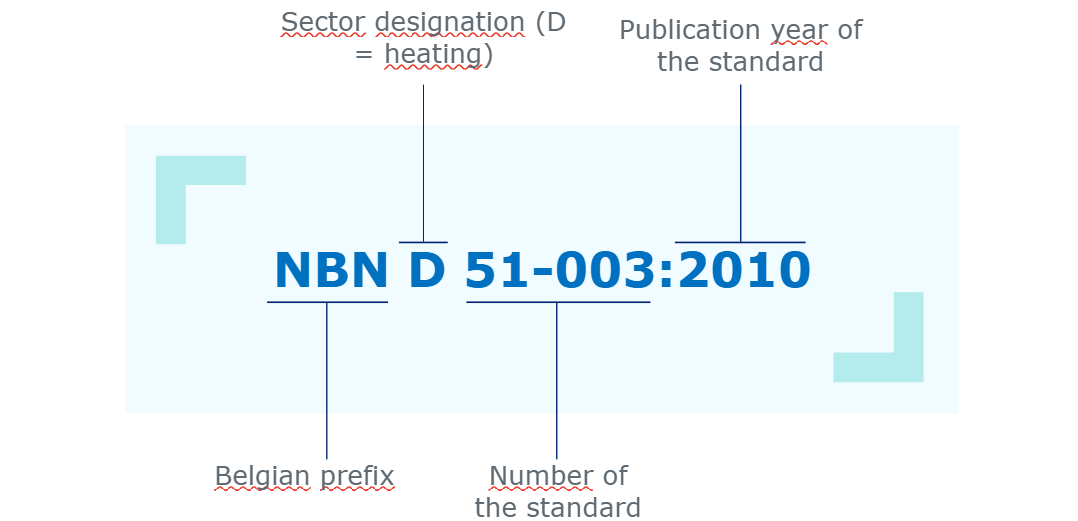
example of a correct standard reference

What could go wrong?

  1. Reference to the wrong version
    Without a publication year, an outdated standard may be applied. Unnecessary delay or cost.
  2. Delays and unnecessary costs
    In large projects or government contracts, unclear reference can lead to disputes or even shutdowns.
  3. Non-conforming implementation
    Suppliers may rely on a different interpretation, risking defective quality or safety problems.
  4. Legal risks
    Sometimes legislation refers to a specific standard. Incorrect reference can then lead to noncompliance.

How do you correctly refer to a standard?

Follow these basic rules and you can be sure of an accurate reference:

1. Always use the official standard number: complete and in capital letters,
including type (NBN, EN, ISO, ...), number and year.

  • Correct: NBN EN ISO 9001: 2015
  • Error: ISO 9001 (too vague)

2. State the year of publication

‍This wayeveryone knows which version applies. If your reference does not include a year, the most recent version automatically applies.

3. Apply the correct prefix

     
  • Belgian standard: NBN B 15-001
  •  
  • European standard registered as NBN standard: NBN EN 10001
  •  
  • International standard registered as NBN standard: NBN ISO 39001
  •  
  • Combination of European and international: NBN EN ISO 45001

4. Specify parts if necessary
Some standards consist of several parts: NBN S 01-400-1:2022 or NBN EN 13501-2:2023. If so, refer to the appropriate part.

5. Pay attention to punctuation and indexes
hyphen (-), slash (/), colon (:) or plus sign (+) make all the difference.

Examples

  • Belgian standard
    NBN D 51-003:2010
    Belgian standard applicable in Belgium.
  • European standard
    NBN EN 17186:2019
    Identical in all European countries, registered as a Belgian standard
  • International standard
    NBN ISO 45001:2023
    International standard, adopted as a Belgian standard
  • Combination
    NBN EN ISO 9001:2015
    International standard harmonized at the European level and adopted as a Belgian standard

Conclusion

Correctly referring to standards is not a detail, but a prerequisite for clarity, legal certainty and trust. It ensures that all parties involved have the same quality and safety requirements and that projects can proceed without delay or discussion.

Rule of thumb: always use the full official standard number with year, and when in doubt, check that you are using the correct version and prefix. This way you avoid problems and gain time, money and peace of mind.

If you are still unsure about the correct referral or still have questions, NBN is ready to help you.

Did you find this interesting?

Receive our monthly newsletter with valuable insights, client stories, event updates and engaging articles. Join 20,000+ professionals!

Related articles

See all articles
Arrow pointing right

Event: A Journey to Sustainability

The Power of Standards
📅 19/11/2025
Sign up