


Port of Antwerp-Bruges: standards as the foundation for safe, efficient, and future-proof infrastructure
Last updated:
May 19, 2026
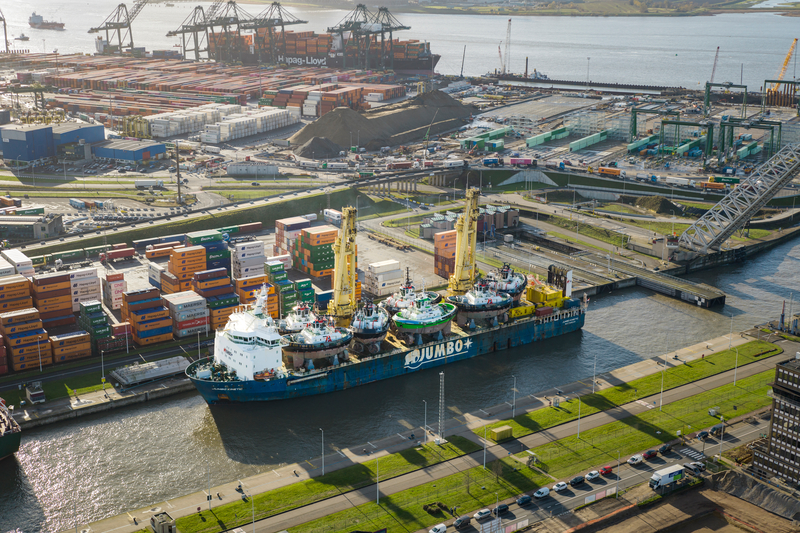
The Port of Antwerp-Bruges is more than just a maritime gateway. It is one of the key economic drivers of Belgium and Europe and an international hub where logistics, industry, and innovation converge. The port simultaneously serves as a landlord, operator, regulator, and community builder. This means that, as organisation , you organisation only manage infrastructure and support shipping operations, but also establish frameworks, set rules, and foster collaboration among dozens of stakeholders.
Technical expertise plays a crucial role within this broad remit. Stefan Van der Borght, BIM coordinator within the Port Projects department, sees how standards are an integral part of the work on a daily basis. "Standards are a guide for us," he says. "They provide clarity, reduce the risk of errors, and ensure that everyone works in the same way."
When you think of a port, you see cranes, containers, and ships. But behind that physical infrastructure lies a world of engineering, planning, maintenance, and complex technical processes. In that reality, reliability, safety, and efficiency are essential — and that is precisely where standards play a role.
Stefan refers, among other things, to major sustainable investments, such as the first operational hydrogen-powered tugboat and a fully electric version. Such projects rely on precision and uniform methods. "For us, sustainability goes beyond ecology alone," he explains. "It's also about efficiency, safety, longevity, and collaboration within a future-proof port."
To this end, standards are a natural part of the process, both in design and implementation as well as management.
The technical departments of the Port of Antwerp-Bruges use a wide range of standards, with a focus on European standards. The Eurocodes play a central role in maritime infrastructure, especially in structures such as locks, quay walls, and other infrastructural elements.
To support these complex works, ranging from heavy structures to mechanical installations, we have a lease contract via NBN for an extensive collection of up to 300 international standards (ISO and EN). This strategic set of standards goes beyond general specifications and includes essential requirements for the execution and safety of heavy structures and the associated hoisting and lifting equipment. The collection also includes specific standards for material properties (such as steel and welding procedures), surface coatings, and metrological standards, such as the ISO tolerance system. This targeted set enables us to carry out all our projects with the highest degree of safety, quality, and compliance.
The use of standards is multifaceted: it ranges from complex calculations in large investment projects to smaller repairs carried out in-house. When material properties, tolerances, or technical series are required, the right standard provides immediate certainty. "Without that framework, you would have to constantly discuss what is correct," says Stefan. "A standard eliminates discussion and ensures that everyone starts from the same reference point and uses the same unambiguous specifications."
Finally, management standards are also discussed, including building management, safety aspects, IT infrastructure, and health and well-being procedures. Standards such as ISO 9001 (quality), ISO 27001 (information security), and ISO 45001 (health and safety) are regularly requested and serve as guidelines when departments want to optimize or certify their processes.
Having the most recent standard is essential. "But sometimes we really need to consult historical standards. For example, screw threads on gas pipes are often still in the old British imperial measurements. Fortunately, we have standards to fall back on."
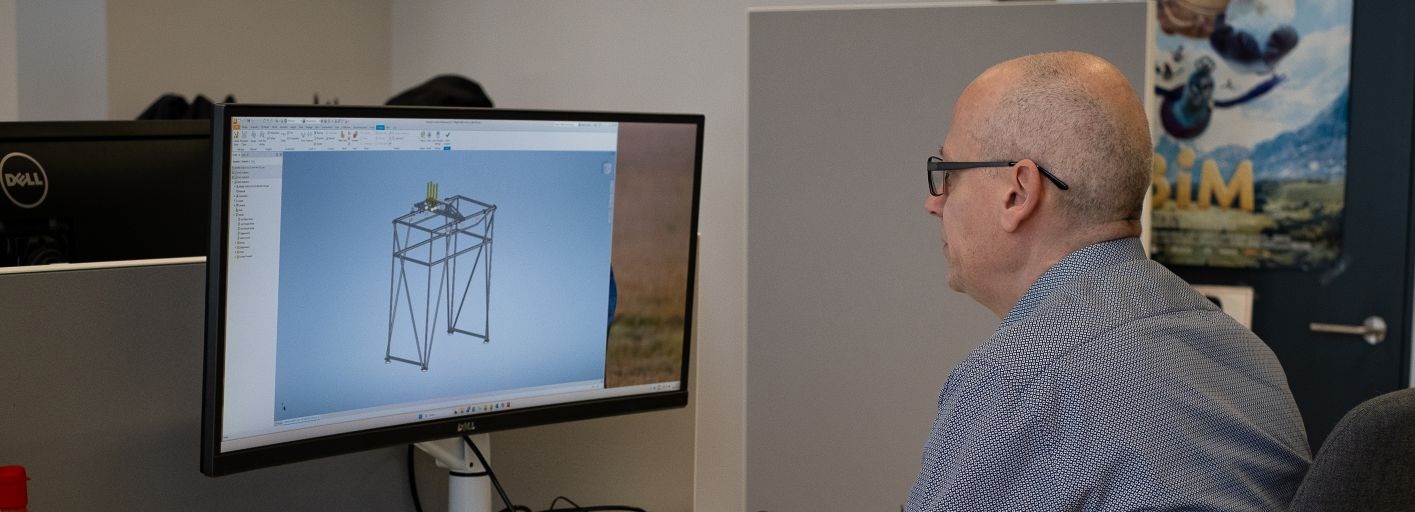
Within Maritime Infrastructure, BIM (the digital Building Information Model) is playing an increasingly important role today. Projects are modeled entirely digitally, which means that bottlenecks become visible more quickly and different disciplines can work together more effectively.
In this BIM environment, standards form a common language. They determine which values, dimensions, and tolerances are used. They prevent misinterpretations and ensure that designers, contractors, and suppliers speak the same technical and contractual language. This is all the more important in large projects such as new locks, docks, quay walls, or the renovation of heavy mechanical installations.
Stefan emphasizes that standards help to avoid mistakes even before a project enters the implementation phase. "You detect problems much earlier. In the past, you only had 2D drawings, and sometimes it only became clear during implementation that something was wrong. Now we can solve that in the model, but you have to work with correct, up-to-date standards."
For the Port of Antwerp-Bruges, online management of standards via the NBN platform has become second nature. Technical teams work with a lot of information at the same time, and projects are large, complex, and risk-sensitive. Consulting the most recent version of a standard is crucial in this regard.
Stefan explains: "The platform ensures that everyone has access to the most up-to-date versions. Working with outdated information can have serious consequences, especially in large infrastructure projects. The platform drastically reduces that risk."
He manages access for around thirty colleagues himself. These are mainly project engineers and employees who work directly on technical files, designs, and tenders. "Standards are often less familiar territory for operational colleagues, but they are truly indispensable for project leaders and engineers," he says. "For them, the platform remains a practical and clear tool."
The platform is deliberately kept simple. It immediately displays your own collection, and you can quickly consult or download standards for personal use. Stefan appreciates this simplicity: "Less is more. The platform does exactly what it should do, without any unnecessary bells and whistles."
The collaboration with NBN has been running smoothly for years. Whether it concerns questions about the collection, access to standards, or the efficient organization of internal standard use, Stefan finds the support to be fast and reliable."Gunther, our NBN Account Manager, is our direct line," he says. "The contact is personal, and we always get a quick response. That makes a big difference."
This support is essential in an environment where technical choices can have a major operational and financial impact. NBN helps the Port Authority to use accurate information and manages access to standards in a structured manner.
What does the NBN motto trusted knowledge mean trusted knowledge an organisation literally operates on a global scale? For Stefan, the answer is simple: “It’s about trusting that the information is correct. We work on projects that need to be safe, sustainable, and robust. So you need to be sure that you’re working with the right data. That trust is there.”
In a port where thousands of people work, where shipping and industry converge, and where every project affects dozens of stakeholders, reliable knowledge is not a luxury but a necessary foundation. And that is precisely where the NBN platform plays its role: it provides the certainty needed to build the port of tomorrow — safe, efficient, and future-proof.
How can you manage your standards efficiently and in compliance with copyright laws? Discover all the benefits on this page!


.webp)
