


Renaat Mondelaers, a young professional in standards development
Last updated:
May 23, 2026

Why would an Organisation invest Organisation and money in standards development? And as a young professional, do you deserve a place among experts with twenty or thirty years of experience? In a conversation with Renaat Mondelaers, a robot safety engineer at Movu Robotics, it becomes clear that standards development is much more than just a technical or administrative matter. It is a strategic choice for the Organisation, a learning experience for the delegate, and a place where new technology, experience, and common sense come together.
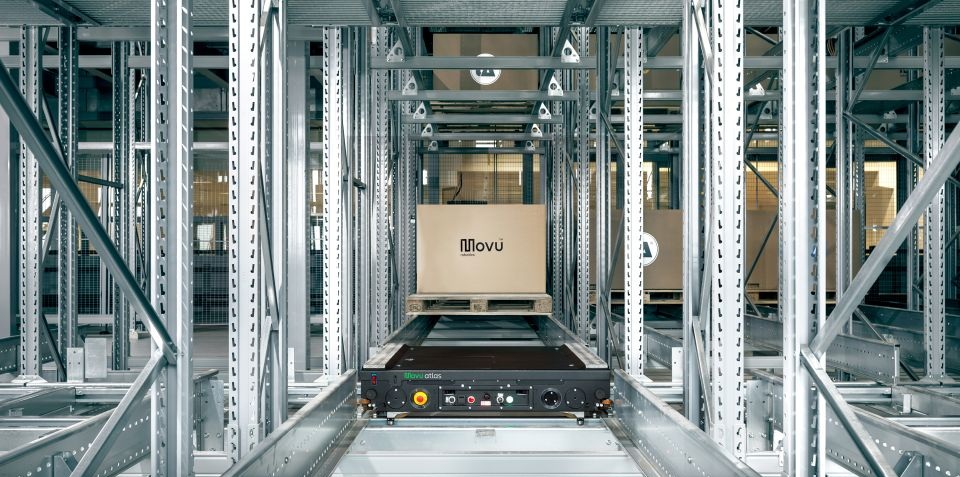
Movu Robotics is a young, fast-growing player in warehouse automation and a subsidiary of the stow Group. The Organisation fully automated warehouses in which mobile robots store and move goods, controlled by IT systems such as WMS or ERP. This technology is evolving at a rapid pace, driven in no small part by the growth of e-commerce and new digital applications.
According to Renaat, machine safety standards are indispensable. “Standards are a practical tool for ensuring legal compliance,” he says. “They translate general legislation into concrete guidelines. Officially, they are non-binding, but in practice, customers expect machines to be built in accordance with standards. Without that framework, you can no longer offer a credible solution today.”
Movu Robotics views participation in standards development as an investment. By having a seat at the table, the Organisation knows Organisation standards are on the horizon and can anticipate them in a timely manner. More importantly, it can help shape how new technologies are assessed in terms of safety.
By participating in standards development, you can help create a level playing field. “Movu Robotics invests in safety,” Renaat explains, “but not all players do so to the same extent. Standards ensure that solutions can be objectively compared and that safety does not become a competitive disadvantage.”
In addition, Movu Robotics builds machines for which specific standards may not yet exist. The market is quick to adopt new technology, but customers don’t always know how to properly assess it. By participating in the development of standards, the Organisation helps to provide Organisation .
That requires commitment. “Developing standards takes time, preparation, and consultation,” Renaat admits. “It’s not my primary responsibility. That’s why I’m constantly weighing where my efforts will add the most value, and I focus only on what’s important for logistics automation and system integration.”
From committee to working group: how it works in practice
Standard development takes place at various levels. Renaat participates in ISO/TC 199 “Safety of Machinery” and ISO/TC 299 on robotics. These technical committees set the broad guidelines, but the substantive work is carried out in working groups.
“Within TC 199, I serve on two working groups. WG 3 is working on ISO 14122, the standard for fixed means of access to machinery, such as stairs, ladders, and work platforms. WG 11 deals with ISO 11161, the standard for the integration of different machines into a single system.” The latter is particularly interesting for Movu Robotics. After all, a warehouse does not contain just one machine, but ten, twenty, or even fifty robots that function together as a single unit.
Participating in standards development is also an exercise in reaching consensus. The working groups include people from diverse backgrounds with varying interests: product suppliers, machine manufacturers, consultants, and insurers. Discussions sometimes get bogged down in details that are crucial to some and incidental to others.
“For example, we had a discussion about the minimum height at which a platform must be protected by a fence or fall protection,” Renaat explains. “We assumed a minimum height of half a meter. Others pointed out that you can also sustain injuries if you fall from a height of just ten centimeters. But if you were to secure everything starting at that height, it would become impractical and extremely expensive. From the machine builder’s perspective, you therefore want to set that threshold higher to keep costs, complexity, and construction manageable.”
Renaat learned from this that it’s not about proving yourself right, but about finding the best solution for everyone. That means choosing your battles and understanding when it’s better to give in than to keep pushing. In his view, that mindset can be applied to any other job as well.
At 35, Renaat is often the youngest person in the room. He sits alongside people who have been active for decades and sometimes even continue to contribute after retirement. That age gap is palpable. Experience is occasionally drawn upon to put new ideas into perspective, especially when those ideas are based on technologies that are not yet widely adopted.
Nevertheless, he believes that young experts definitely have a place in standards development. Their input is valued, provided it is well-founded. Preparation plays a key role in this. The NBN Expert Training gave him insight into how standards committees work and how to fulfill your role within them. In addition, he never goes into a meeting unprepared: before every meeting, he coordinates his positions with colleagues at Movu Robotics.
In late 2025, Renaat was named the winner of the NBN Expert Award in the "Young Expert" category for his work on the safe integration of machines and compliance with safety standards in advanced automation projects.
Today, standards committees are still often dominated by experienced professionals. While this has its advantages, it also carries risks. Technology is evolving faster than ever. Without input from people who work with new applications on a daily basis, standards risk falling behind.
That’s why Renaat has a clear message for young professionals: “Don’t let that discourage you. You don’t need thirty years of experience to offer valuable input. On the contrary, your fresh perspective and familiarity with new technologies are more than welcome.”
What began as a technical assignment turned into a professional enrichment for Renaat. He has built a network that spans multiple sectors and leverages it in his work. Sometimes, an idea from a completely different sector leads him to the solution for a problem in robotics.
This cross-pollination is a direct result of standards development, where professionals from different sectors learn together, explore together, and create better solutions together. For companies like Movu Robotics, participating in standards development is a strategic tool. For young experts, it is a unique opportunity to help shape the future of technology and safety.
Would you like to help develop the latest standards, just like Renaat?


